
Gavin DeGraw is an American singer, songwriter, pianist, and guitarist whose career has lasted for more than two decades. Best known for songs such as “I Don’t Want to Be,” “Chariot,” “Follow Through,” and “Not Over You,” DeGraw built his wealth through music sales, songwriting, touring, royalties, streaming, licensing, and other entertainment opportunities.
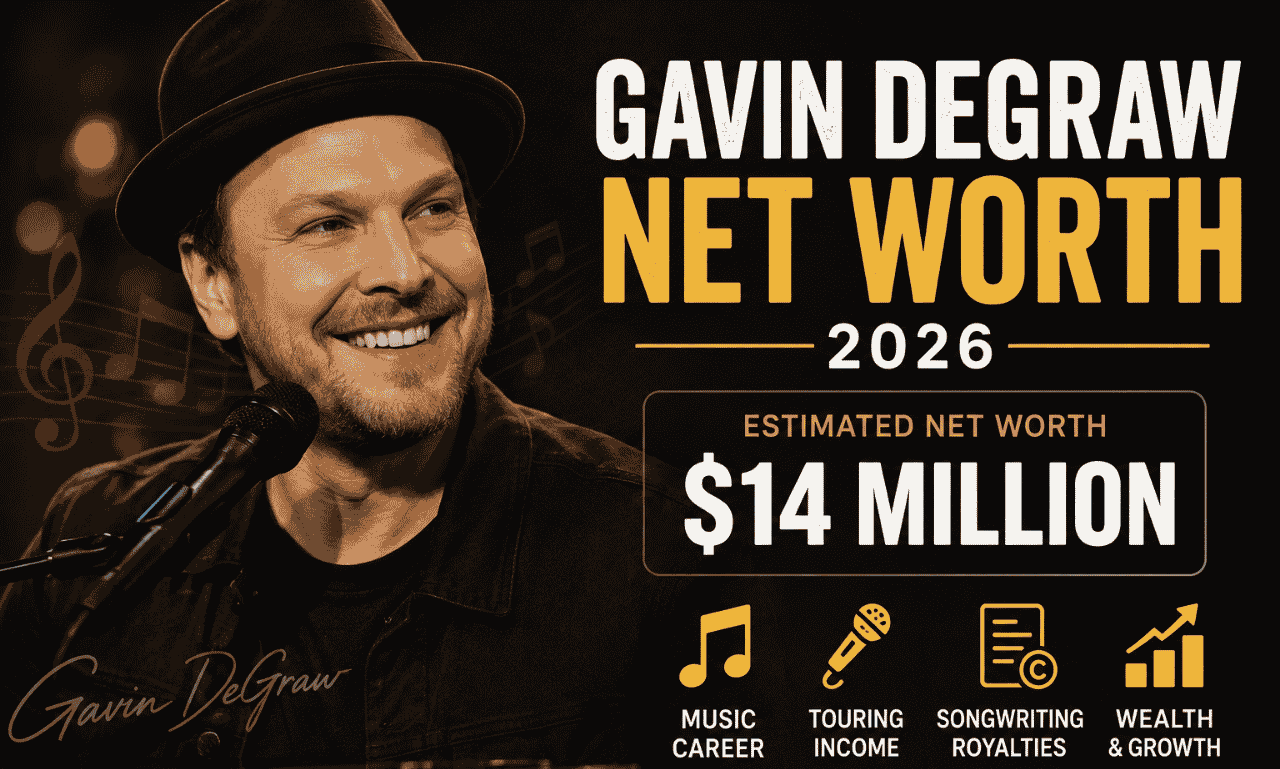
In 2026, Gavin DeGraw’s net worth is estimated at approximately $14 million. This figure is an estimate based on publicly available information and should not be considered an audited statement of his personal finances. His exact income, investments, property holdings, contracts, and royalty agreements are private.
What makes DeGraw financially interesting is the longevity of his music catalog. His breakthrough came with Chariot in 2003, but songs from that era continue to attract listeners, appear in television and film, and generate potential royalty income. His later projects, including Face the River, A Classic Christmas, and Chariot 20, have also helped keep his career active.
Gavin DeGraw Net Worth
Gavin DeGraw’s estimated net worth of $14 million in 2026 reflects the cumulative value of a successful singer-songwriter career rather than one single source of income.
His debut album, Chariot, was a major turning point. The album introduced audiences to several of his most recognizable songs and eventually earned platinum certification. “I Don’t Want to Be” became particularly important after being selected as the theme song for the television series One Tree Hill.
DeGraw continued building his financial position with albums including Gavin DeGraw, Free, Sweeter, Make a Move, Something Worth Saving, and Face the River. Each release expanded his catalog and created additional opportunities for streaming, performance, licensing, and publishing income.
His wealth also benefits from the fact that he is a songwriter as well as a performer. Songwriters can continue earning from compositions through various royalty and licensing arrangements long after a song is released.
Another important factor is touring. DeGraw has maintained a substantial live-performance career, giving him another income source beyond recorded music.
You must be read: Brian Setzer Net Worth 2026: His Remarkable Wealth Story
How Gavin DeGraw Built His Wealth
DeGraw’s estimated wealth can broadly be connected to several areas:
- Album and digital music sales
- Streaming royalties
- Songwriting and publishing
- Concerts and touring
- Music licensing
- Television and film-related work
- Merchandise
- Other entertainment opportunities
The exact percentage contributed by each category is not publicly available. Therefore, claims assigning precise annual amounts to each revenue source would be speculative.
Gavin DeGraw Income Sources
Music Sales and Streaming
Recorded music remains central to DeGraw’s career.
His catalog includes commercially successful songs from several different periods. “I Don’t Want to Be,” “Chariot,” “Follow Through,” “In Love with a Girl,” and “Not Over You” remain among his best-known recordings.
Streaming has changed how musicians generate money. Instead of relying primarily on physical album purchases, artists can earn through repeated listening across digital platforms. The actual amount an artist receives depends on factors such as the platform, territory, rights ownership, record contracts, publishers, and other participants in the royalty chain.
Because DeGraw has a catalog stretching back to the early 2000s, even older songs can continue contributing to his overall earning potential.
Songwriting Royalties
Songwriting is one of the most important parts of Gavin DeGraw’s financial story.
DeGraw has written or co-written many songs in his catalog. Successful compositions can potentially produce publishing income when they are streamed, performed publicly, licensed, reproduced, or used in audiovisual productions.
His songwriting connection to “We Both Know,” performed with Colbie Caillat for the film Safe Haven, is another example of his work extending beyond his own albums.
The song received a Grammy nomination for Best Song Written for Visual Media, adding recognition to DeGraw’s songwriting career.
Touring Income
Live performances have been an important part of DeGraw’s career since his early days as a performer in New York.
Touring can be particularly valuable for established musicians because fans are willing to pay to experience familiar songs in person. Concert revenue can come from ticket sales, VIP experiences, merchandise, and other event-related activities.
However, it is important to distinguish tour revenue from personal income.
A concert’s gross ticket sales do not represent the amount an artist takes home. Touring expenses can include venue costs, promoters, musicians, crew members, transportation, hotels, equipment, insurance, management, production, and taxes.
Even after these expenses, touring can remain a meaningful contributor to an established artist’s overall earnings.

Music Licensing
Music licensing represents another potential source of income.
One of DeGraw’s most recognizable songs, “I Don’t Want to Be,” became closely associated with One Tree Hill. Its television exposure introduced the song to a much broader audience and helped cement it as a signature part of DeGraw’s career.
His work connected to Safe Haven provides another example of his music reaching film audiences.
Licensing can also create a valuable feedback loop: exposure increases recognition, recognition increases listening, and increased listening can potentially contribute to streaming and catalog revenue.
Merchandise and Other Revenue
Merchandise can provide an additional income stream for touring artists. Shirts, physical albums, special editions, collectibles, and other products can contribute to revenue around tours and releases.
DeGraw has also participated in television, film, interviews, special performances, and other entertainment activities. However, there is not enough public financial information to determine how much these activities contribute to his total wealth.
Early Life and Education
Gavin Shane DeGraw was born on February 4, 1977, in South Fallsburg, New York.
Music became part of his life at an early age. He began playing piano as a child and later developed his skills as a singer and songwriter.
DeGraw grew up in a musical family. His older brother Joey DeGraw also pursued music, while his sister Neeka has been associated with the family’s creative background.
His early musical influences included artists such as Ray Charles and Sam Cooke. These influences can be heard in the soulful and piano-driven style that became part of his musical identity.
DeGraw attended Ithaca College on a music scholarship before studying at the Berklee College of Music. Eventually, he chose to focus more heavily on his professional music career.
That decision proved important. Instead of pursuing a conventional educational path, he began concentrating on songwriting and live performance, eventually moving toward New York City’s music scene.
You must be read: Aftyn Behn Net Worth 2026: Revealing Her Real Financials
Gavin DeGraw Career Journey
Early Career
Before becoming a nationally recognized artist, DeGraw performed in clubs and venues around New York.
These performances allowed him to develop his stage presence and songwriting style. His ability to combine piano-driven pop with soul and rock influences helped distinguish him from many other emerging performers.
2003: Chariot
The release of Chariot changed DeGraw’s career.
The album included “I Don’t Want to Be,” “Follow Through,” and the title track “Chariot.” Its songs helped introduce DeGraw to a large mainstream audience.
“I Don’t Want to Be” received another major boost when it became the theme song for One Tree Hill.
Chariot ultimately achieved platinum status, establishing the commercial foundation of DeGraw’s career.
2008: Gavin DeGraw
DeGraw returned with his self-titled album in 2008.
The album continued his commercial momentum and featured songs such as “In Love with a Girl.”
By this point, DeGraw had moved beyond the status of a one-album success and established himself as a long-term recording artist.
2009: Free
His next album, Free, continued his development as a songwriter and performer.
Rather than attempting to simply recreate the sound of Chariot, DeGraw continued experimenting with his musical style.
2011: Sweeter
The release of Sweeter produced another major career highlight.
“Not Over You,” co-written with Ryan Tedder, became one of DeGraw’s most commercially successful songs.
The song demonstrated the continuing earning power of DeGraw’s songwriting and recording career.
2013–2014: Make a Move
DeGraw released Make a Move in 2013.
During this period, his songwriting also received additional recognition through “We Both Know,” his collaboration with Colbie Caillat for Safe Haven.
The song earned a Grammy nomination, further strengthening DeGraw’s credentials as a songwriter.
2016: Something Worth Saving
Something Worth Saving continued DeGraw’s studio career.
By this stage, his financial strength increasingly came from having a large and established catalog rather than depending on one particular single.
2022: Face the River
DeGraw returned with Face the River in 2022.
The project was especially personal because it reflected on family, loss, and the people who shaped his life.
The album showed that DeGraw remained creatively active nearly two decades after his breakthrough.
2023: A Classic Christmas
DeGraw expanded his catalog with A Classic Christmas in 2023.
Holiday music can have a unique commercial life because listeners return to Christmas recordings every year. That gives seasonal projects the potential for recurring streaming and performance exposure.
2024: Chariot 20
One of the most interesting developments in DeGraw’s later career was Chariot 20.
The project revisited his breakthrough album and introduced new interpretations of songs from that important period.
From a financial perspective, rerecording or revisiting established material can help reactivate an artist’s catalog and introduce older songs to new listeners.
Major Achievements
Gavin DeGraw’s career includes several important achievements:
- Platinum certification for Chariot
- Major mainstream success with “I Don’t Want to Be”
- Strong commercial performance for “Not Over You”
- Grammy nomination for “We Both Know”
- Multiple successful studio albums
- Extensive touring career
- International performances
- Television exposure through One Tree Hill
- Film-related songwriting through Safe Haven
- Continued recording activity in the 2020s
His biggest achievement may ultimately be career longevity. Many artists experience one successful album and then disappear from the mainstream. DeGraw has continued recording, touring, performing, and releasing music for more than 20 years.
Assets and Lifestyle
Gavin DeGraw has generally maintained a relatively private lifestyle compared with celebrities who regularly showcase expensive properties and luxury purchases.
There is limited reliable public information about his complete real-estate portfolio, investment accounts, vehicles, or other personal assets.
That makes it difficult to calculate the precise value of his physical assets.
For a musician such as DeGraw, however, the most important asset may not be a house or car. It can be the music catalog itself.
Songs and compositions can have economic value because they may generate royalties and licensing opportunities over many years.
This is one reason established musicians can continue earning after releasing new music less frequently.
Personal Life
DeGraw has generally kept his private life away from excessive media attention.
He has spoken publicly about his family and personal experiences through his songwriting, particularly around the release of Face the River.
His brother Joey DeGraw is also involved in music, making the DeGraw family particularly connected to the entertainment industry.
There has been public speculation about DeGraw’s romantic life over the years, but information about his current relationship status is limited. It is more responsible to distinguish confirmed information from celebrity gossip.
Gavin DeGraw Net Worth Growth Timeline
| Year | Career Development | Wealth Impact |
| 2003 | Chariot released | Major career breakthrough |
| 2005 | Chariot earns platinum certification | Growing catalog value |
| 2008 | Self-titled album | Continued commercial income |
| 2009 | Free released | Catalog expansion |
| 2011 | Sweeter and “Not Over You” | Major hit and royalty potential |
| 2013 | Make a Move | Continued recording career |
| 2014 | Finest Hour | Catalog consolidation |
| 2016 | Something Worth Saving | Continued touring and music income |
| 2022 | Face the River | New catalog material |
| 2023 | A Classic Christmas | Seasonal catalog opportunity |
| 2024 | Chariot 20 | Reactivation of breakthrough catalog |
| 2026 | Established career | Estimated net worth of $14 million |
These figures describe career and wealth progression rather than audited annual net-worth statements.
You must be read: Jessalyn Wanlim Ethnicity Net Worth: Revealing 2026 Facts
Why Gavin DeGraw’s Music Catalog Matters
One of the most important insights when examining Gavin DeGraw’s net worth is the value of catalog longevity.
A successful song can continue producing economic value long after its original release.
For example, “I Don’t Want to Be” was released during DeGraw’s early career but gained additional cultural significance through One Tree Hill. “Not Over You” similarly remains recognizable years after its initial release.
A catalog can generate money through multiple channels:
- Streaming
- Radio
- Public performances
- Digital sales
- Physical sales
- Synchronization licensing
- Publishing
- Covers
- Reissues and rerecordings
This means an artist does not necessarily need a new No. 1 single every year to maintain earning potential.
Interesting Facts About Gavin DeGraw
- Gavin DeGraw began playing piano when he was a child.
- He developed his professional reputation through live performances.
- His brother Joey is also a musician.
- Chariot was his breakthrough studio album.
- “I Don’t Want to Be” became the theme song for One Tree Hill.
- “Not Over You” became one of his biggest commercial hits.
- He co-wrote “We Both Know” with Colbie Caillat.
- “We Both Know” received a Grammy nomination.
- DeGraw has performed internationally.
- He released Face the River in 2022.
- He released A Classic Christmas in 2023.
- He revisited his breakthrough material with Chariot 20 in 2024.

FAQs About Gavin DeGraw Net Worth
What is Gavin DeGraw’s net worth in 2026?
Gavin DeGraw’s net worth is estimated at approximately $14 million in 2026. The figure is an estimate based on publicly available career and financial information, not a verified personal financial statement.
How did Gavin DeGraw become famous?
DeGraw became widely known after releasing his debut album Chariot in 2003. Songs such as “I Don’t Want to Be,” “Follow Through,” and “Chariot” helped establish his mainstream career.
What is Gavin DeGraw’s biggest song?
“I Don’t Want to Be” is one of DeGraw’s signature songs and became particularly famous as the theme song for One Tree Hill. “Not Over You” is another major commercial success.
Does Gavin DeGraw still make music?
Yes. DeGraw has remained active in music, releasing projects including Face the River, A Classic Christmas, and Chariot 20.
How old is Gavin DeGraw?
Gavin DeGraw was born February 4, 1977. He is 49 years old in 2026.
Is Gavin DeGraw married?
There is no reliable public evidence establishing that Gavin DeGraw is currently married. He has generally kept his personal relationships private.
Does Gavin DeGraw earn money from royalties?
Yes, his recordings and songwriting can generate royalties. The precise amount he receives depends on contracts, ownership, publishing arrangements, streaming activity, and other factors that are not publicly disclosed.
Did Gavin DeGraw win a Grammy?
DeGraw has received Grammy recognition as a nominee. His collaboration with Colbie Caillat, “We Both Know,” was nominated for Best Song Written for Visual Media.
What was Gavin DeGraw’s first album?
His first major studio album was Chariot, released in 2003.
What is Gavin DeGraw’s most recent music?
One of his notable recent projects is Chariot 20, released in 2024 as a new take on the album that launched his career.
Where was Gavin DeGraw born?
Gavin DeGraw was born in South Fallsburg, New York, United States.
What are Gavin DeGraw’s main sources of income?
His main potential income sources include recorded music, songwriting, publishing, streaming, touring, licensing, merchandise, and other entertainment opportunities.
Final Thoughts
Gavin DeGraw’s estimated $14 million net worth in 2026 reflects the financial strength that can come from building a sustainable music career over several decades.
His journey began with Chariot, but his wealth has not depended solely on that album. Subsequent releases, hit singles, songwriting credits, television exposure, film collaborations, touring, streaming, and catalog exploitation have created a broader financial foundation.
The biggest lesson from DeGraw’s career is the value of intellectual property and longevity. A successful songwriter owns or participates in creative assets that can continue producing economic value long after the original recording date.
With a catalog containing recognizable songs such as “I Don’t Want to Be,” “Chariot,” “Follow Through,” and “Not Over You,” DeGraw has created music with lasting commercial and cultural relevance.
His more recent releases also show that the career is still active. Face the River, A Classic Christmas, and Chariot 20 demonstrate that DeGraw continues to add to and reactivate his catalog.
For those reasons, the estimated $14 million figure should be viewed not simply as the result of album sales, but as the accumulated value of recordings, songwriting, royalties, touring, licensing, and more than 20 years of professional music activity.
Note: Celebrity net-worth estimates are inherently uncertain because private assets, taxes, contracts, royalty splits, management fees, investments, and liabilities are generally not publicly disclosed.
You must be read: Tara Narula Net Worth 2026: Powerful Career, Wealth & Income